
Winemakers grow grapes in fields called vineyards, and those fields are almost never chosen at random. The best vineyard sites share a few consistent traits: good sun exposure (ideally a south or southeast-facing slope), well-drained soil that doesn't stay wet, a long enough frost-free growing season, and enough airflow to keep disease pressure manageable. If your yard or land ticks most of those boxes, you can grow wine-quality grapes at home. If it doesn't, you still have options, but you'll need to pick varieties that compensate for what's missing.
Fields Where Winemakers Grow Grapes: Site Guide
Marcus Whitfield
9 Jul 2026
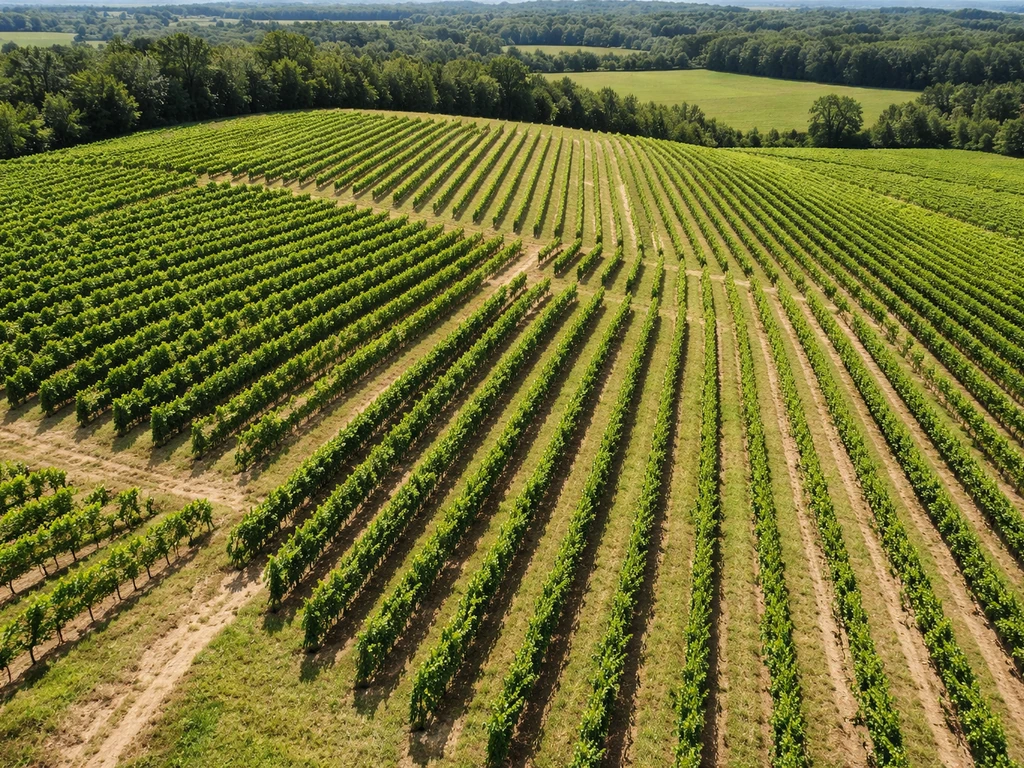
What vineyard fields usually have in common
Walk through any classic wine region and you'll notice the vineyards share a recognizable look. They're rarely on flat, soggy ground. They tend to sit on slopes, hillsides, or gently rolling terrain where water moves away quickly and the vine roots have room to dig deep. Here's what those sites typically share.
- A gentle slope, often between 3% and 10%, which helps cold air drain away and keeps the soil from staying saturated after rain
- A south, southeast, or southwest-facing aspect in the Northern Hemisphere, maximizing the hours of direct sunlight hitting the canopy
- Deep, well-drained soil that lets roots go down 3 feet or more without hitting hardpan, clay layers, or bedrock
- Moderate natural soil fertility (not too rich), because overly fertile soil pushes vines to grow leafy canopies instead of ripening fruit
- Soil pH in the 5.5 to 6.5 range for most varieties, though some perform acceptably up to 7.0
- Good airflow through and around the canopy, which dries dew and rain off the leaves quickly and cuts disease risk significantly
- Freedom from frost pockets at the base of slopes, where cold air collects on still nights
None of these have to be perfect. Plenty of productive home vineyards start with a decent south-facing yard and soil that needs a bit of amendment. What you're looking for is the combination, not perfection in any single category.
Climate and exposure: sun, heat, frost, and airflow
Climate is the biggest factor winemakers think about when choosing fields, and it should be the first thing you evaluate too. Grapes need heat to ripen, but they also need cold winters to rest, and they're surprisingly vulnerable to late spring frosts that kill newly opened buds.
Heat summation and growing degree days
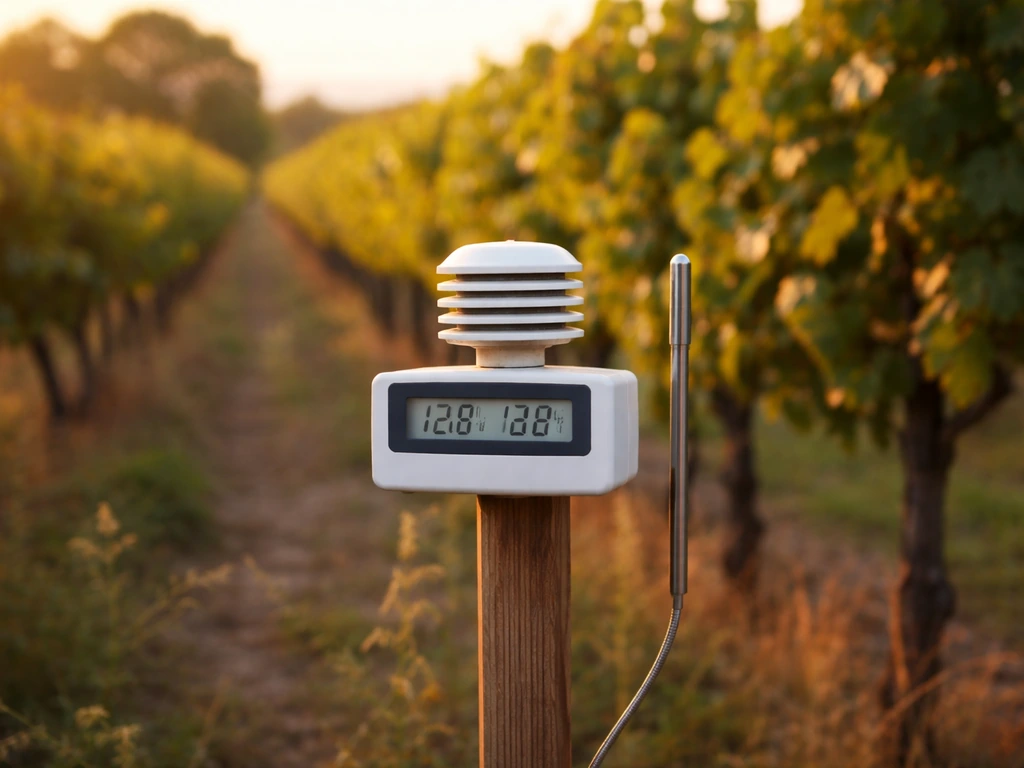
Viticulture researchers measure seasonal heat using growing degree days (GDD), calculated by tracking daily temperatures above a base of 50°F from April through October. This is called the Winkler index, and it's the most practical tool for comparing your region to known wine country. A cool region like the Willamette Valley in Oregon might accumulate around 2,000 GDD. Napa Valley runs closer to 3,500. Your local county extension office or weather station can often give you historical GDD data. If you're in a region that regularly hits 2,500 or more GDD, you can ripen almost any variety you want. Below 2,000, you'll want to focus on early-ripening cultivars.
Frost risk and cold air drainage
Late spring frosts are arguably the most dangerous thing for a young vineyard. Frost damage happens when cold air, which is heavier than warm air, flows downhill and pools at the lowest point on your property. That's exactly where you don't want to plant. A mid-slope position is far safer than the bottom of a hill or a low-lying flat area. If you have dense hedges, a fence, or a row of trees at the bottom of a slope, those can act like a dam, backing cold air up into your planting area. Removing or thinning those barriers before you plant is one of the best investments you can make. Southern-facing slopes break bud earlier in spring, which means slightly more frost exposure risk, but they also ripen fruit earlier in fall, so the tradeoff depends heavily on your specific climate.
Humidity, rainfall, and disease pressure
High humidity is the main enemy of grape foliage. Downy mildew thrives in warm, wet conditions during the growing season. Powdery mildew can take hold when relative humidity stays above 40% for extended periods. Botrytis bunch rot follows wet weather at harvest time and can devastate a crop in days. In humid climates (most of the eastern US, the Gulf Coast, and the Pacific Northwest), disease management through variety selection and canopy airflow becomes the central vineyard challenge. Many people use a grape growing guide to learn what states grow grapes based on heat units, frost risk, and disease pressure. Good site airflow, open canopy training, and disease-resistant varieties make this manageable, but it's honest to acknowledge that a grower in Virginia has a harder disease challenge than one in eastern Washington.
Soils that work for grapes: drainage, texture, pH, and depth
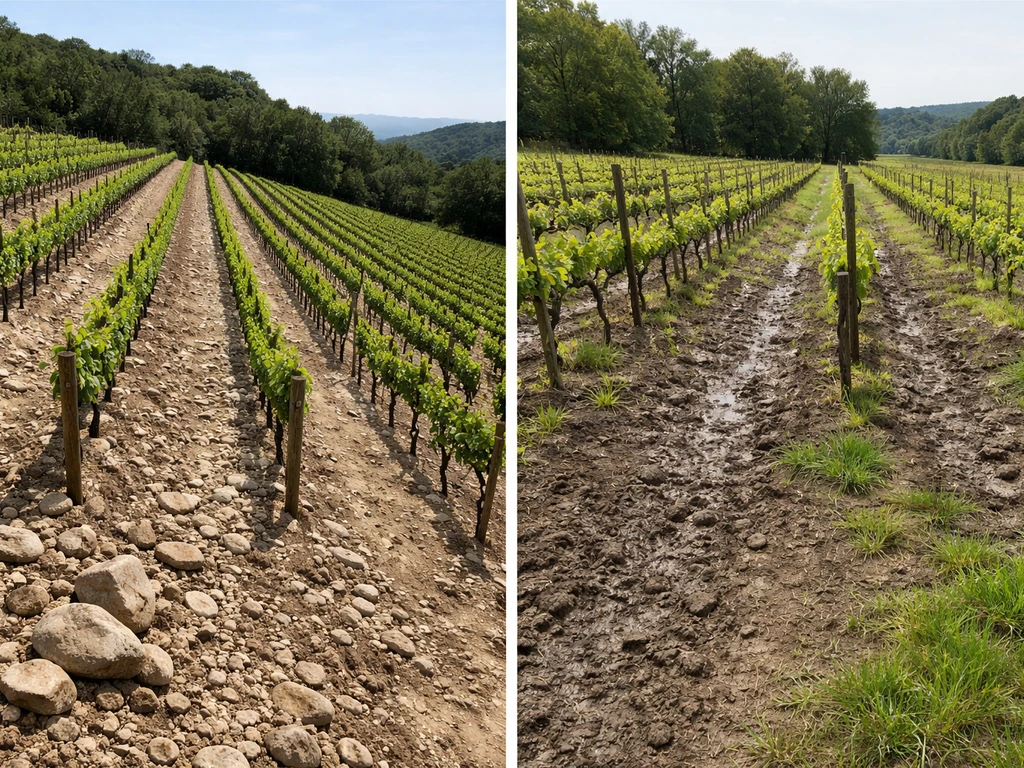
Grapes are famously adaptable to poor soils, and winemakers often say their best wines come from stressed vines on rocky hillsides. That's partly true, but 'poor soil' specifically means low fertility and good drainage, not waterlogged or compacted soil. There's a big difference.
Drainage comes first
Poor drainage is the single most consistent cause of vineyard failure in home gardens. Grapes sitting in wet soil lose root health fast, become vulnerable to winter injury, and often just die within a few seasons. Before you plant, dig a hole about 18 inches deep, fill it with water, and time how long it takes to drain. If the water is still sitting there after 3 to 4 hours, you have a drainage problem. Hardpan layers, shallow bedrock, or dense clay subsoils all create this condition. In some cases, raised beds or mounded rows can get you enough root zone to work with. In severe cases, the site may simply not be viable without significant drainage work.
Soil texture, depth, and pH
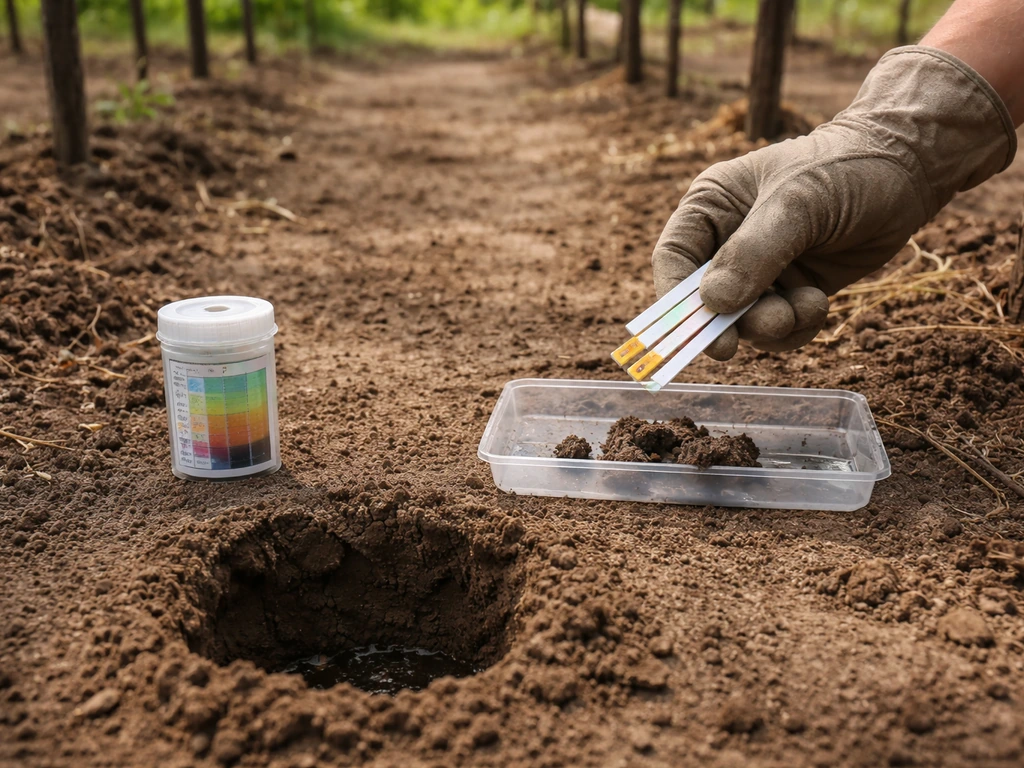
Loam, sandy loam, and gravelly soils are ideal because they drain well but still hold enough moisture and nutrients for vine growth. Heavy clay drains slowly and compacts around roots. Pure sand drains too fast and dries out quickly in hot weather. Aim for soil depth of at least 24 to 36 inches to bedrock or a restrictive layer. Shallower than that and your vines will struggle in drought and heat. For pH, most university extension programs in the US agree on a target range of 5.5 to 6.5 for grapes, though Penn State notes some varieties perform reasonably well up to 7.0. A simple soil test from your local extension office will tell you where you stand and what amendments you need. Soil testing is genuinely one of the most useful things you can do two years before planting.
Fertility and organic matter
Rich, heavily amended garden soil that grows great vegetables is often too fertile for grapes. High nitrogen drives excessive shoot growth, which creates a dense, shaded canopy that favors disease and delays ripening. Grapes planted in moderately lean soil tend to produce better fruit with more manageable canopies. If you're converting a heavily fertilized garden bed, you may need to avoid nitrogen inputs for a season or two and let natural soil processes balance things out.
How to evaluate your own yard or land like a winemaker would
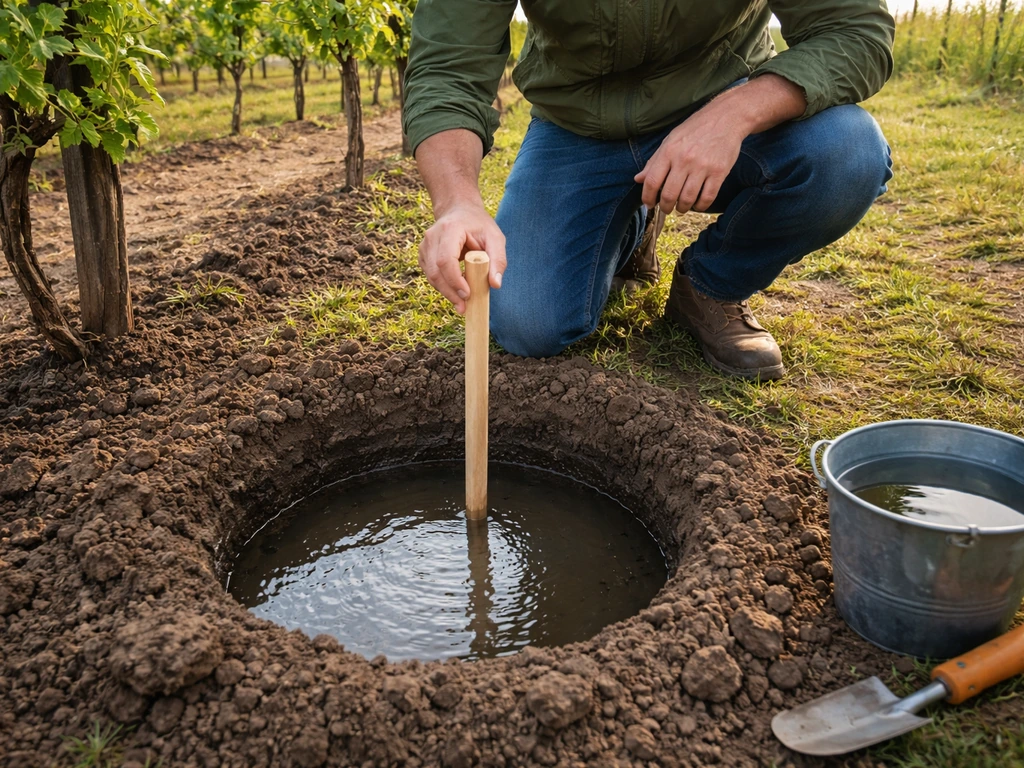
Professional vineyard site selection takes years of climate observation, soil mapping, and topographic analysis. As a home grower, you can get 80% of the way there in a weekend. Here's a practical sequence.
- Run a percolation test: dig an 18-inch hole, fill it, and watch. If water drains out in under 2 hours, your drainage is good. 2 to 4 hours is acceptable. Longer than that requires either a different site or drainage intervention.
- Walk your property at dawn on a calm, clear morning in early spring and note where frost forms first. Those cold-air pockets are your worst planting spots.
- Track sun hours across your candidate planting area with a sun calculator app or simply observe the site at 9am, noon, and 4pm over a few days. Grapes need at least 6 to 8 hours of direct sun daily, and more is better.
- Check the USDA Plant Hardiness Zone map for your address, then look up historical last frost dates for your county through NOAA or your state extension service. This tells you how long your frost-free growing window actually is.
- Get a soil test. Your local cooperative extension office usually offers these for $15 to $30. It will tell you pH, nutrient levels, and organic matter percentage and give you specific amendment recommendations.
- Estimate your GDD by looking up historical weather data from a nearby airport or weather station. Add up the degree days above 50°F from April through October. This number tells you which varieties can ripen in your location.
- Map wind patterns on your site. A steady prevailing breeze through the canopy is good for drying leaves. A wind tunnel effect from a gap in buildings or trees can cause physical damage to shoots. Note both.
The Cornell Finger Lakes Grape Program recommends starting this evaluation at least two years before planting, and that timeline is genuinely useful. One full growing season of observation tells you things about frost, drainage, and sun that no single-day survey can capture.
Choosing grape varieties for your field and climate
This is where site evaluation pays off directly. Once you know your GDD, your minimum winter temperature, your disease pressure, and your frost window, you can match varieties to your conditions with real confidence instead of guessing.
Cold-climate growers: winters below -10°F
If you're in Minnesota, the Dakotas, Wisconsin, or similar cold-climate states, standard Vitis vinifera varieties like Cabernet Sauvignon or Chardonnay simply won't survive reliably without winter protection. Grapes are grown commercially in many wine-producing regions across the world, including Europe, the Americas, Africa, Asia, and Oceania what countries grow grapes. The University of Minnesota has done extensive work breeding cold-climate hybrids specifically for this challenge. Marquette is probably the best-known example: it's a red wine variety that can handle winters down to around -30°F and still produces serious wine quality. Frontenac, La Crescent (white), and Itasca are other Minnesota-developed options worth considering. Ohio State Extension also recommends varieties by minimum temperature range, which is a helpful framework if you're in a transitional climate.
Humid eastern climates: disease resistance matters most
In the mid-Atlantic, Southeast, Midwest, and New England, your variety selection has to account for fungal disease pressure. Chambourcin, Norton, Vidal Blanc, and Niagara are established choices that handle humidity better than most vinifera. Newer disease-resistant hybrids like Crimson Cabernet, Arandell, and Aromella have also shown strong performance in these conditions. If you're set on vinifera varieties in a humid region, be prepared for a serious spray program or accept that you'll have mediocre results in wet years.
Dry western climates: the most flexibility
If you're in the Pacific Northwest, California, or the intermountain West with dry summers and adequate heat, you have the most variety options. Washington, Oregon, and California all have home growers successfully producing Cabernet Sauvignon, Merlot, Pinot Noir, Riesling, and dozens of other vinifera varieties. If you want to know whether you can grow Koshu grapes in the US, start by checking your local heat and winter cold against Koshu’s growing needs home growers successfully producing Cabernet Sauvignon, Merlot. Your main constraints will be heat summation (whether it's warm enough to ripen your chosen variety) and winter cold in higher elevations or northern areas. blank" rel="noopener noreferrer">Washington State University's cold hardiness model is a useful resource for anyone in the Northwest wondering about winter survival risk for specific varieties.
| Climate Type | Winter Low | Recommended Varieties | Main Challenge |
|---|---|---|---|
| Cold continental (MN, ND, WI) | Below -20°F | Marquette, Frontenac, La Crescent, Itasca | Winter hardiness |
| Humid eastern (VA, PA, OH, NC) | -10°F to 10°F | Chambourcin, Norton, Vidal Blanc, hybrids | Fungal disease pressure |
| Transitional mid-south (TN, AR, MO) | 0°F to 15°F | Cynthiana/Norton, Blanc du Bois, Cloeta | Heat, humidity, Pierce's disease risk |
| Dry western (WA, OR, CA inland) | 10°F to 25°F | Cabernet Sauvignon, Merlot, Riesling, Syrah | Heat summation matching to variety |
| High desert/mountain (CO, ID upper elevations) | -5°F to 15°F | Marquette, Riesling, Pinot Gris, cold-hardy hybrids | Short season, late spring frosts |
Season length and timing: when to plant and what to expect
Grapes are perennial plants, which means you're committing to a multi-year process, not a single-season experiment. Setting realistic timeline expectations before you start will save a lot of frustration.
Bare-root vines are typically planted in early spring, after the risk of hard frost has passed but while the vines are still dormant. In most of the US, that window falls between late March and early May depending on your zone. Container-grown vines can go in a bit later, but spring planting is still preferred because it gives roots the longest possible establishment window before summer heat and drought stress arrive.
Year one is all about root establishment. You probably won't get much canopy growth, and you shouldn't expect fruit. Year two you'll start to see real vine development. Most home vineyards produce their first small crop in year three, and a full, reliable harvest typically takes four to five years from planting. That's not a discouraging timeline if you know it going in. It just means the planning you do now, including variety selection and site prep, matters more than the planting day itself.
For season length, grapes generally need a frost-free growing period of at least 150 days to ripen most varieties, and some late-season vinifera varieties want 180 days or more. Early-ripening hybrids like Marquette or Frontenac can work in shorter seasons down to around 140 frost-free days, which opens the door for growers in colder states. If you're unsure about your frost-free window, look up the average last spring frost and first fall frost dates for your county. The difference between those two dates is your working season.
Practical vineyard layout basics for home growers
You don't need to design a commercial vineyard, but thinking through layout before you put posts in the ground will save you real headaches later. Here are the fundamentals.
Row orientation
North-south row orientation is the standard recommendation for most home vineyards. NC State Extension research found that north-south rows intercept more total sunlight than east-west rows and tend to produce slightly higher yields. That said, on a sloped site, running rows across the slope (on contour) to prevent erosion can sometimes override the orientation preference. If your slope runs east-west, rows on contour will run north-south naturally, which is ideal. On a north-south slope, you'll need to weigh erosion risk against sun interception.
Spacing and trellis basics
Penn State Extension recommends rows spaced about 8 feet apart as a practical minimum for home growers, with vines spaced 3 to 8 feet apart within the row depending on variety vigor and training system. More vigorous varieties like Concord or Niagara want more space. Lower-vigor varieties or spur-pruned wine grapes can work at tighter in-row spacing. Standard trellis line posts are typically 8 feet long, set 2 to 3 feet into the ground, leaving about 5 to 6 feet of post above ground to support a 4-foot fruiting canopy for a vertical shoot positioning (VSP) system. If you plan to use any equipment, even a riding mower, keep rows at least 8 feet apart. Narrower than that and you'll be fighting your own trellis every week.
Ground management between rows
The space between your rows needs to be managed from day one. Bare soil erodes on slopes and compacts over time. Most home vineyards do well with a permanent low-growing grass or clover cover crop between rows, mowed regularly, and a weed-free strip under the vines themselves. The cover crop stabilizes the soil, slows erosion, and adds a modest amount of organic matter. Avoid high-nitrogen cover crops directly adjacent to the vine row, especially in the first few years, as extra nitrogen encourages shoot growth at the expense of root development and fruit quality.
A simple starting checklist
- Confirm your frost-free growing window is at least 140 to 150 days for your target varieties
- Run a percolation test and a soil pH test before ordering vines
- Identify your best sun exposure on the property and check for cold-air pooling risk
- Choose varieties matched to your winter low temperature AND your GDD (not just one or the other)
- Plan rows 8 feet apart, oriented north-south where the slope allows
- Order bare-root vines from a reputable nursery in late fall or early winter for spring delivery
- Prepare trellis posts and wire before the vines arrive so you're not scrambling at planting time
Growing grapes at home is genuinely achievable across a much wider range of the US than most people assume. If you're wondering where grapes grow in the US, look at climates like California’s Central Valley, the Pacific Northwest, and much of the eastern wine regions that match the right heat and cold needs growing grapes at home. The key is matching your ambition to your actual site and climate instead of hoping for the best. A south-facing slope in Pennsylvania, a well-drained backyard in Texas, a hillside lot in Oregon, or even a raised-bed setup in Minnesota can all produce real fruit from real vines. Start with site evaluation, pick varieties honestly suited to your conditions, and give the vines the time they need. That's exactly what winemakers do when they choose their fields, and it works just as well at home scale.
FAQ
Can I still grow grapes if my field lacks ideal sun or heat?
Yes, but only if you’re matching the missing factor with variety choice and extra protection. For example, if your site has good drainage but low heat, choose early-ripening cultivars, and plan to use heat-reflective ground cover or row covers during cold snaps to reduce bud loss.
How reliable is the 18-inch drainage test for deciding if a vineyard site is viable?
Not really. The drainage hole test tells you about how water moves through the root zone, but compaction and hardpan often vary with depth. If you find slow drainage, dig a second test deeper (closer to where roots will reach) and check for dense clay or restrictive layers before assuming raised beds are enough.
What if my only good sun area is at the bottom of a slope, can I fix frost risk?
If you’re in a frost-prone spot, adding a fan or irrigation can help with specific frost management methods, but the most important fix is topography. Cold-air pooling at the lowest point is hard to overcome, so choose a mid-slope position first, then consider frost protection only as a backup.
Do I need winter protection for grapes in every cold climate?
Overwintering strategies depend on winter low temperature and whether you’re growing vinifera or hybrids. In cold climates, you may need soil mounding, vine wrapping, or other ground-based protection, and bare-root planting times still need to match your local frost calendar so the vines establish before heat and drought.
Is it ever worth ignoring north-south row orientation?
Row orientation can be adjusted, but it should be deliberate. If you run rows along contour on a slope, you may sacrifice ideal north-south light but gain erosion control and better water management. The practical rule is to avoid cross-slope planting that creates washouts, then use canopy training to keep airflow adequate.
What’s the danger of over-fertilizing or using the same compost you use for vegetables?
Yes, and it’s a common mistake. Vines can handle lean conditions, but if you start with extremely low fertility, yields and vigor can stall. After soil testing, consider only moderate, targeted amendments, and avoid heavy nitrogen right next to planting rows because it increases dense canopy growth and disease risk.
If my site is humid but drains well, will disease still be a major problem?
It depends on where the moisture problem occurs. If humidity stays high but your site has strong airflow, disease pressure may be manageable with canopy spacing and resistant varieties. If you also have poor drainage or frequent leaf-wetting, you can still get severe disease even with good pruning.
Can I use cover crops everywhere in my vineyard?
Spreading cover crops too close to the vine row can change vine vigor, especially early in establishment. Keep a weed-free strip under the vines and place cover crops between rows, and avoid high-nitrogen mixes adjacent to vines for the first few seasons so root development can catch up.
Why can’t I rely only on average GDD to choose grapes?
In most cases, you should treat GDD and frost dates as selection filters, not guarantees. Weather variability means two sites with similar historical GDD can still differ in late frost timing. That’s why the article’s recommendation to observe your conditions for at least one full growing season is so important.
What should I focus on in the first one to two years after planting?
Start with your first three-year plan, not just your “first harvest” goal. Since year one is mostly root establishment and year two is typically limited canopy fruit, plan weed control, irrigation support, and trellis setup early so you’re ready for productive growth when the vines ramp up.
How do I plan row spacing if I might use equipment like a riding mower or sprayer?
No, equipment changes the math. Even with the recommended minimum row spacing, a riding mower, sprayer, or ATV creates extra turning radius and clearance needs. If you plan to use any machinery, add a buffer to the row spacing now so you don’t have to replant or remove vines later.
Can I grow any grape variety if I have a long enough growing season but harsh winters, or vice versa?
Yes, but it should be based on compatibility with your season length and hardiness, not just taste. For shorter frost-free windows, focus on cultivars proven to ripen around your available days, and verify your winter minimum temperatures before buying. If either one is a mismatch, expect years of poor yields or unreliable survival.