
Grapes grow best in well-drained, moderately fertile loam or sandy loam soil with a pH between 5.5 and 6.5. They genuinely do not like wet feet, heavy clay that stays waterlogged, or overly rich soil packed with organic matter. If your ground drains well, sits in that pH range, and has at least 3 to 4 feet of workable depth before hitting rock or hardpan, you are already in good shape. If not, there is a lot you can do before you plant your first vine. Whether grapes can grow year round depends on your local climate and the variety you choose, since grapevines need a dormancy period in most regions plant your first vine.
What Type of Soil Is Needed to Grow Grapes
Marcus Whitfield
10 Jul 2026
Grape soil basics: what 'best' really means
Here is something that surprises most new grape growers: grapevines are not nearly as fussy about soil fertility as they are about drainage. Some of the world's most celebrated wine regions grow grapes in rocky, almost nutrient-poor ground. What those soils share is excellent drainage and enough depth for roots to work downward. Grapes actually perform worse in overly rich soil because it pushes excessive leafy growth at the expense of fruit. So when you hear 'best soil for grapes,' think lean and well-drained before you think lush and fertile.
That said, 'lean' does not mean neglected. Soil texture, pH, depth, and drainage all interact. A vine planted in soil that checks every box except drainage will struggle or die. Cornell's Finger Lakes Grape Program puts it well: internal drainage, texture, depth, water-holding capacity, and soil chemistry together determine vine productivity and fruit quality. Getting all of those roughly right matters more than optimizing any single factor.
Ideal soil characteristics: texture, drainage, and depth
Texture
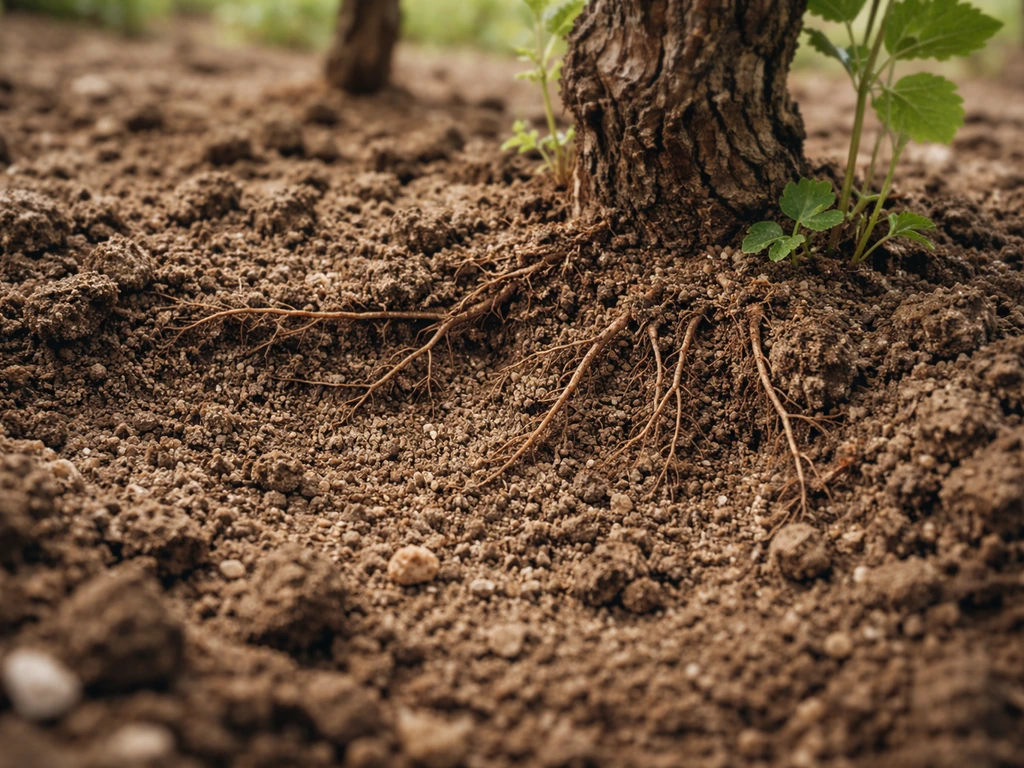
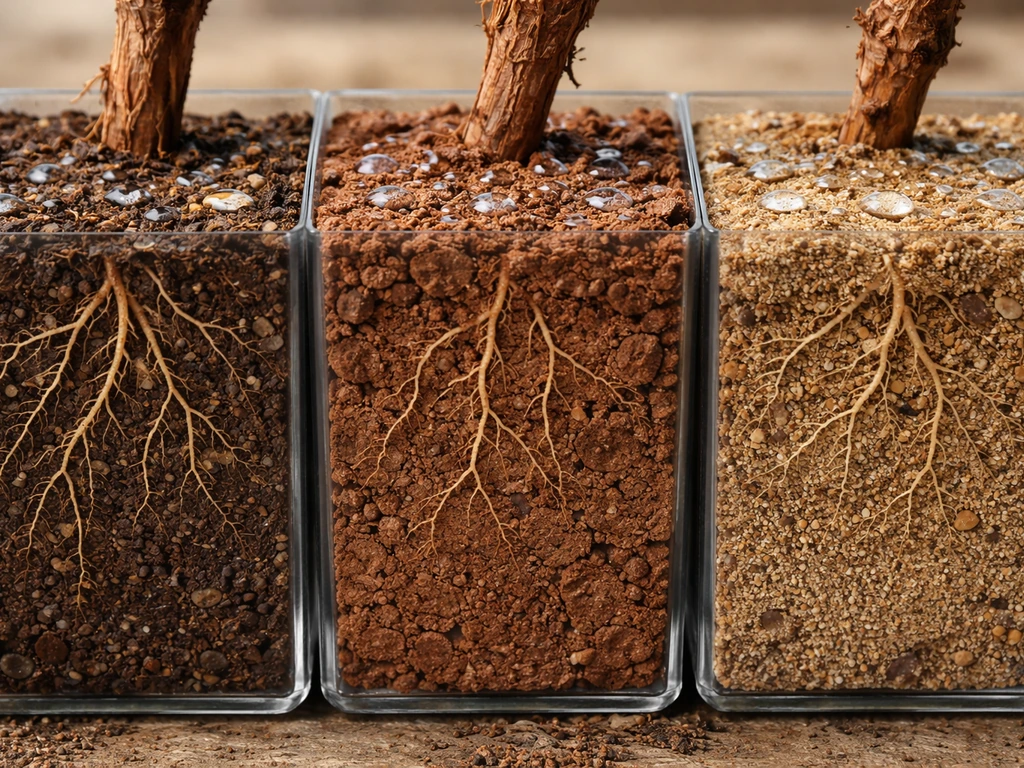
Loam and sandy loam are the sweet spots. They drain well enough to keep roots from sitting in water but hold enough moisture and nutrients to support a growing vine. Pure sand is problematic in the other direction: it dries out fast, holds almost no nutrients, and can actually compact in certain conditions. If you are gardening on a sandy plot, you will need to pair it with organic amendments to keep moisture and fertility from dropping to near zero. Heavy clay sits at the other extreme, holding too much water and creating the kind of soggy conditions that can kill grape roots in as little as two days of waterlogging.
Drainage
This is non-negotiable. Grapevine roots develop extensive, deep systems, and they need oxygen in the soil to do that. Waterlogged soil cuts off that oxygen supply fast. UC IPM specifically advises avoiding soils with poor drainage and recommends raised beds when you are dealing with hardpan, claypan, or shallow soil over bedrock. A quick way to check your drainage at home is the percolation test: dig a hole about 12 inches deep, fill it with water, let it drain, then fill it again and time how fast it empties. If the water drops at least 1 inch per hour, you are in decent shape. Slower than that and you have a drainage problem worth solving before planting.
Depth
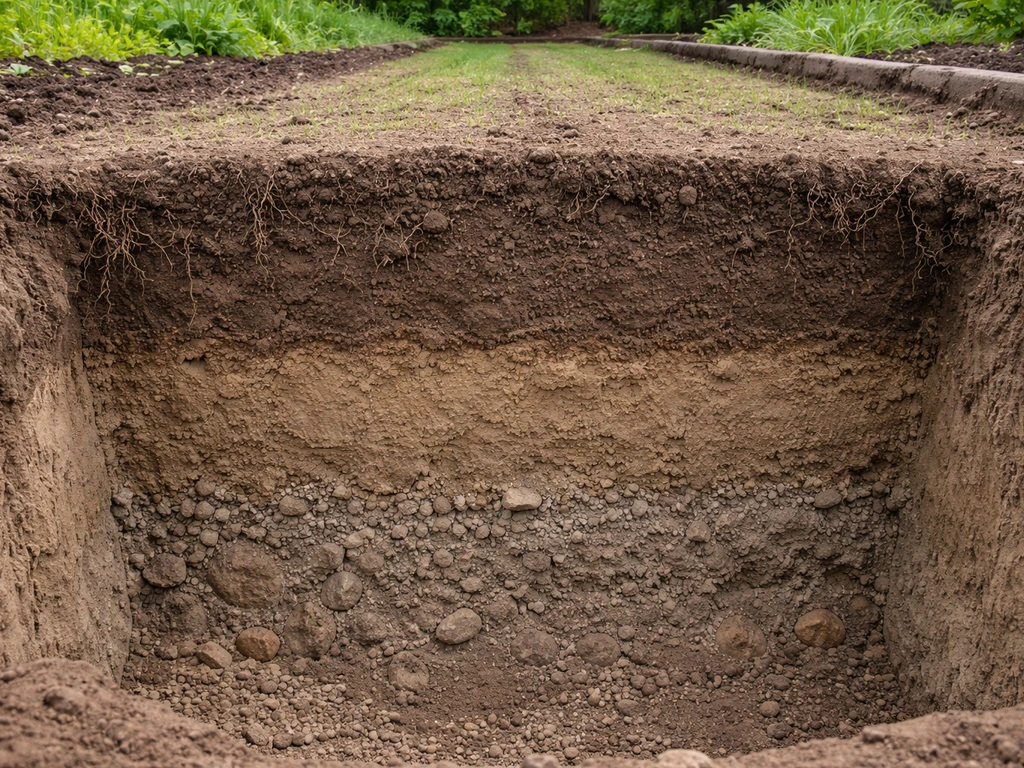
UC Marin Master Gardeners recommends at least 3 to 4 feet of workable soil above any hardpan or rock layer. Most grape roots concentrate in the top 3 feet, but vines still benefit from being able to push deeper as they mature. If you hit rock or an impermeable layer shallower than that, drainage usually suffers too, compounding the problem. In those situations, raised beds or mounded rows are your best practical option.
Soil pH and nutrient targets for grapes
The consensus target pH for grapevines is 5.5 to 6.5, with many extensions pointing toward 6.0 to 6.5 as the practical sweet spot for most varieties. Virginia Tech's soil testing lab targets 6.5 specifically. Washington State University notes that pH 6.5 to 6.8 optimizes nutrient availability, particularly for wine grapes. The reason this range matters so much is not a mystery: soil pH controls how available nutrients are to the vine. Go below pH 4.5 and you start seeing magnesium and potassium deficiencies. Push above pH 7.0 and micronutrients like iron and manganese become locked up and unavailable, causing problems that look like poor nutrition even when fertility levels are fine.
Different grape types do have slightly different tolerances. French hybrid varieties generally handle pH up to about 7.0 reasonably well. American varieties like Concord tend to prefer the lower end of the range, around pH 5.5. Vinifera grapes (Chardonnay, Cabernet, etc.) generally want 6.0 or above. These differences matter when you are matching a variety to a site that has a pH you cannot easily shift.
On the nutrient side, phosphorus, potassium, magnesium, and calcium are the key parameters beyond pH. One important caution: organic matter content in the soil should stay below about 3.5 percent at planting. Grapes do not need, and actually do not want, a compost-rich vegetable-garden-style soil. Too much organic matter feeds excessive vegetative growth and can create nutrient imbalances. If your soil is already high in phosphorus or potassium from previous gardening, do not add more. Test first, then amend only what is actually deficient.
How to test your soil at home (and what results mean)
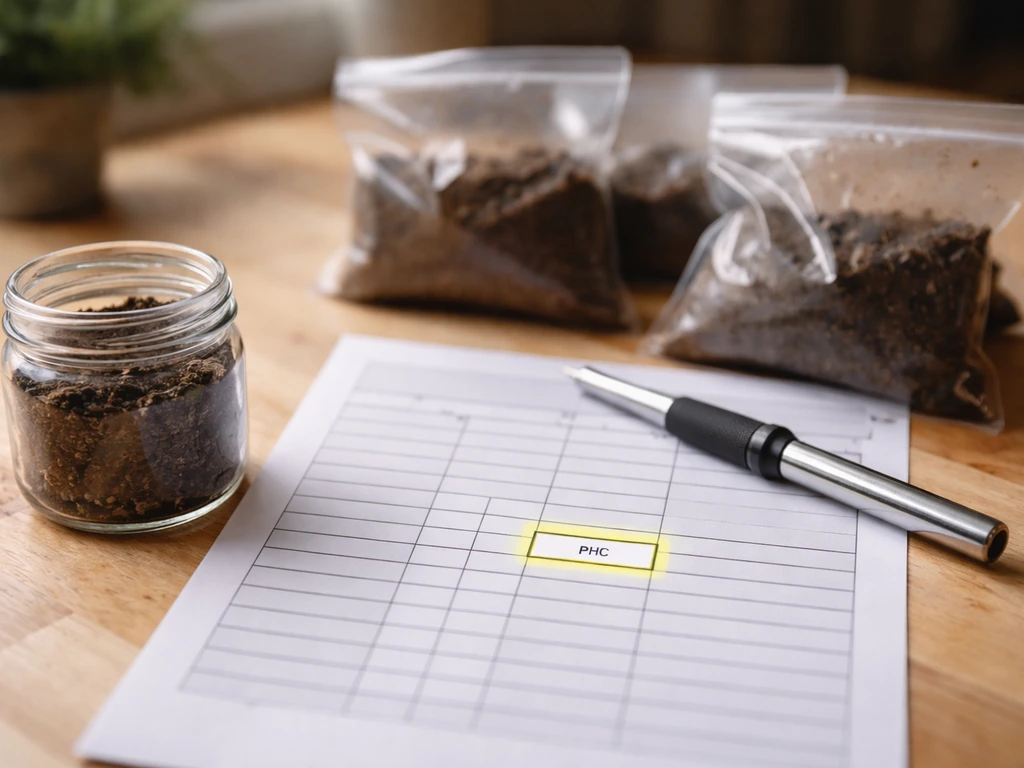
Send a sample to a lab. Seriously, do this before you do anything else. Basic home pH meters and kits give you a rough number but miss the full picture. A lab test from your state extension service or a university soil testing lab (Penn State, UMN, UMass, and others all offer these for home gardeners) will return pH, organic matter percentage, phosphorus, potassium, magnesium, and calcium, plus lime or sulfur recommendations already calculated for you. It costs roughly $15 to $25 and saves you from guessing.
To take a good sample, collect soil from several spots across your planting area using a trowel or soil probe, going down about 6 to 8 inches. Mix those subsamples together in a clean bucket, then send about a cup of that mixed soil to the lab. If you are planning a vineyard row, take samples along the row path specifically. For grapes, also request a deeper sample at 8 to 16 inches if the lab offers it, because amendment incorporation below 16 inches before planting is very difficult and good pre-plant data at depth helps you understand what roots will encounter.
When your results come back, focus on these numbers first: pH (target 5.5 to 6.5), organic matter (ideally 2 to 3.5 percent), and the adequacy ratings for phosphorus and potassium. Most labs categorize these as low, medium, optimum, or high. You want optimum for P and K, not high. If pH is off, the lab will tell you how much lime to add (to raise pH) or sulfur (to lower it). One timing note: apply lime or sulfur at least several months before planting, ideally a full growing season ahead, so the soil chemistry has time to stabilize before your vines go in.
How to amend common problem soils
Clay soil
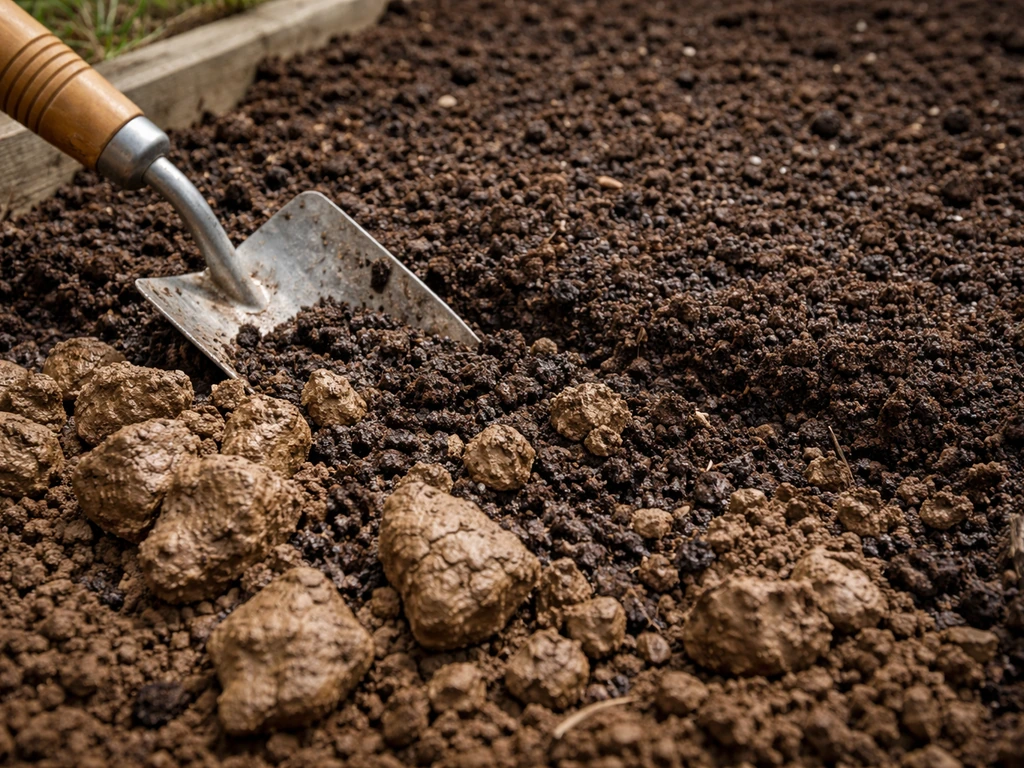
Clay is the most common challenge home gardeners face with grapes. The fix is not a one-time event. You cannot dump a load of compost in a clay plot and call it done. Oregon State Extension is clear on this: improving clay soil structure requires repeated organic matter additions over time.
The practical approach is to work compost into the top 12 inches before planting, then mulch regularly after planting to feed soil biology gradually. Limit tillage to one or two passes because over-tilling clay breaks down its aggregate structure and can create a dense hardpan layer that actually makes drainage worse. Also note that aggressively lowering the pH of clay soils is not recommended because the acidifying amendments can cause salt buildup and further harm drainage and structure.
Sandy soil
Sand alone does not hold water or nutrients well enough for consistent grape production. The fix here is organic matter, but applied gradually and consistently rather than in one heavy dose. Compost added to sandy soil improves water retention and cation exchange (your soil's ability to hold onto nutrients). Be aware that fresh, unfinished organic matter can temporarily tie up nitrogen as it decomposes, so use well-finished compost. Sandy soils are also more prone to nematodes, which can damage grape roots, so rootstock selection becomes especially important if you are in a sandy-soil region.
Rocky or shallow soil
Rocky soil is sometimes workable if water drains through it freely and you have at least 3 feet of workable depth. Rocky ground that drains well is actually not a bad situation for grapes. The real problem is shallow soil over impermeable bedrock or hardpan. In those cases, raised beds or mounded planting rows are the realistic solution. Build up 18 to 24 inches of improved soil mix above the impermeable layer to give roots a fighting chance. Use a mix of topsoil, compost (at modest rates), and coarse sand or perlite for drainage.
Low-drainage or waterlogged sites
If your percolation test shows water draining slower than 1 inch per hour, planting directly into that spot without intervention is a recipe for failure. Your options are: install French drains or drainage tile to move water away, create raised beds or berms, or simply choose a different location. On a slope, even modest elevation change improves drainage significantly.
If you are in a consistently wet climate (think Pacific Northwest or the eastern US from the Mid-Atlantic northward), site selection with drainage as the top priority is as important as any soil amendment you can make. Once drainage and soil depth are handled, grapes can still struggle in extreme heat, so choosing the right variety and managing irrigation matters can grapes grow in hot weather.
pH that is too high or too low
If your pH is below 5.5, add agricultural lime at the rate your soil test recommends. Work it in well and retest after 3 to 6 months. If pH is above 7.0 to 7.5, elemental sulfur can bring it down, but this works slowly (months, not weeks) and is less effective in clay. For severely alkaline soils, variety selection becomes critical because no amendment fully overcomes pH above 8.0. In those situations, French hybrids are more tolerant than vinifera.
Region and climate: matching soil prep to where you actually live
Soil management for grapes does not look the same everywhere, and it is worth connecting soil prep to your local climate conditions. Climate affects how your soil behaves and which grape varieties will actually survive and produce in it. (The climate requirements and temperature ranges that grapes need are a related piece of this puzzle worth understanding alongside soil prep.)
| Region | Typical soil challenge | Key amendment priority | Variety guidance |
|---|---|---|---|
| Pacific Northwest (wet winters, dry summers) | Clay or heavy loam with poor winter drainage | Drainage first, raised rows or tile; modest compost additions | Pinot Noir, Riesling, or cold-hardy hybrids depending on zone; V. vinifera needs well-drained site |
| California and Southwest (hot, dry) | Sandy or alkaline soils; low organic matter | Organic matter for moisture retention; sulfur if pH above 7.0 | V. vinifera thrives here; match variety to heat zone |
| Midwest and Great Plains | Heavy clay in wetter areas; sandy loam in river valleys; wide pH variation | Drainage improvement for clay; compost for sandy; aggressive pre-plant pH correction | Cold-hardy American and French hybrid varieties (Marquette, Frontenac, Concord) |
| Southeast (hot, humid) | Acidic sandy loam or red clay; often low pH | Lime to bring pH to 5.5–6.0; drainage critical in clay areas | Muscadine grapes excel here; most vinifera will not perform well |
| Northeast (cold winters, humid) | Varied: clay loam, rocky glacial soils, acidic | pH correction with lime; drainage improvement; raised beds for shallow rocky sites | Cold-hardy hybrids (Marquette, Catawba, Concord); some Riesling in protected valleys |
Rootstock selection also plays a bigger role than most home gardeners expect. If you are in a sandy-soil area prone to nematodes, choosing a nematode-tolerant rootstock protects your long-term investment. If your site is clay-heavy or occasionally moist, there are rootstocks with better phytophthora tolerance that will handle periods of excess water more gracefully than own-rooted vines. Ask your local extension service or bare-root nursery what rootstocks are appropriate for your soil type and region. Temperature is also a key constraint, so knowing what temperature do grapes grow in helps you time planting and protect vines during cold spells.
Your pre-planting checklist and next steps
Here is a simple sequence to work through before your first vine goes in. Give yourself at least one full growing season of prep time if possible, especially if pH needs correcting or drainage needs structural work. Sun requirements vary by climate and variety, so once your soil and drainage are set, plan for the right amount of direct light for grapes to thrive amount of sun for grapes.
- Run a percolation test on your planting site. Dig a 12-inch hole, fill it twice with water, and time the second drain. Aim for at least 1 inch per hour. If drainage is slower, address it before anything else.
- Send a soil sample to your state extension lab. Request the standard home garden panel plus organic matter percentage. Do this 6 to 12 months before you want to plant.
- Review your pH result against the 5.5–6.5 target. If outside that range, apply lime (too acidic) or sulfur (too alkaline) at the lab-recommended rate and work it into the top 8 to 12 inches.
- Check your organic matter percentage. If it is below 2 percent, incorporate a modest amount of finished compost (2 to 3 inches worked into the top 12 inches). If it is already above 3.5 percent, do not add more.
- Review phosphorus and potassium ratings. Only add P or K amendments if your test shows them as low or deficient. Overloading these nutrients causes its own problems and takes years to correct.
- Choose a grape variety that fits your confirmed soil conditions and your climate zone. Muscadines for the Southeast, cold-hardy hybrids for the Midwest and Northeast, vinifera for California and warm zones. Match pH tolerance to your tested level if you cannot shift it far.
- If your soil is severely shallow (less than 3 feet to hardpan) or drainage cannot be improved, plan for raised beds or mounded rows rather than in-ground planting.
- Retest pH 6 months after applying amendments to confirm the shift before planting. Soil chemistry does not change overnight.
- Plant only after you have confirmed pH is in range and drainage passes the percolation test. Rushing this step is the most common reason home grape plantings fail in the first two years.
Soil prep is genuinely the unglamorous part of growing grapes, but it is also the part that determines whether your vine thrives or just survives. The good news is that most home garden soils are fixable with a season of prep work. Get that soil test done, address drainage and pH honestly, and then pick a variety suited to what you actually have.
Grapes are more forgiving than their reputation suggests, but they will tell you quickly if the soil is not right. Get the ground ready first and the rest of it gets a lot easier. If you are wondering about winter planting, check whether your climate and grape variety can handle cold and dormant conditions Get the ground ready first.
FAQ
Can I grow grapes in the same garden soil where I grow vegetables?
You can, but only if drainage and pH are right and the soil is not overly rich. If your vegetable beds are compost-heavy, expect excessive vine growth and weaker fruiting, so retest and consider reducing amendments to keep organic matter around the target range.
How do I know if my soil is “well-drained” enough without doing a percolation test?
Look for practical field signs first, such as water pooling after rain, persistent muddy footprints, and soil that stays cool and wet in the morning. These are strong indicators you should still do the percolation test before planting, because grapes need oxygen in the root zone.
What depth should I prepare if I can’t reach 3 to 4 feet of workable soil?
If you are hitting hardpan or rock sooner, don’t rely on shallow amendments alone. Plan for raised beds or mounded rows so the vine roots get at least roughly 18 to 24 inches of improved soil above the restrictive layer.
Should I add compost every year to keep grapes healthy?
Avoid the “more is better” approach. For grapes, limit compost inputs and focus on structure rather than feeding, since high organic matter can increase vegetative growth. Use soil-test guidance, and if you add organic matter for clay or sand, do it gradually and consistently.
If my soil test shows high phosphorus or potassium, what should I do?
Do not add more of those nutrients, even if recommendations sound low. Instead, only amend to correct what is deficient, and prioritize pH and drainage first, since availability issues can mimic nutrient problems.
Can I use a store-bought pH kit and skip lab testing?
You can get a rough estimate, but lab testing is usually worth it because grapes respond to precise pH and labs also report nutrient availability and amendment rates. Lab results help you avoid over-liming or acidifying, which can worsen drainage or cause salt buildup.
How long should I wait after applying lime or sulfur before planting grapes?
Apply lime or sulfur with enough lead time for soil chemistry to stabilize, typically several months and ideally a full growing season. Then retest, because repeated corrections can overshoot the target pH.
What’s the best soil texture for grapes if I’m choosing between clay and sand?
Loam and sandy loam are the sweet spot because they balance moisture with drainage. Between clay and sand, choose the site or approach that gives the vine oxygen and depth; for sand you will likely need added moisture retention, for clay you will likely need structural improvement.
Do different grape varieties require different soil preparation?
Yes, especially for pH tolerance. Vinifera often performs better at higher pH than Concord-type grapes, so if your soil pH is difficult to shift, variety selection may be more realistic than trying to force pH with amendments.
My soil is alkaline, can I lower pH enough to grow any grape?
If pH is extremely high, amendments may not fully solve the problem, and variety choice becomes critical. In high-alkalinity situations, more tolerant types often perform better than attempting aggressive pH correction that also risks harming soil structure.
Is rootstock selection different when my soil is sandy or has drainage issues?
Yes. Sandy soils can increase nematode risk, so nematode-tolerant rootstocks can be a practical necessity. For occasionally wet or clay-heavy sites, choose rootstocks with better tolerance to water-related diseases like phytophthora.
Should I plant grapes in a low spot that stays slightly damp but drains eventually?
If the soil drains slower than about 1 inch per hour, planting directly is high-risk. Even if water disappears later, grapes suffer when the root zone remains oxygen-poor, so use drainage solutions or choose a better location.